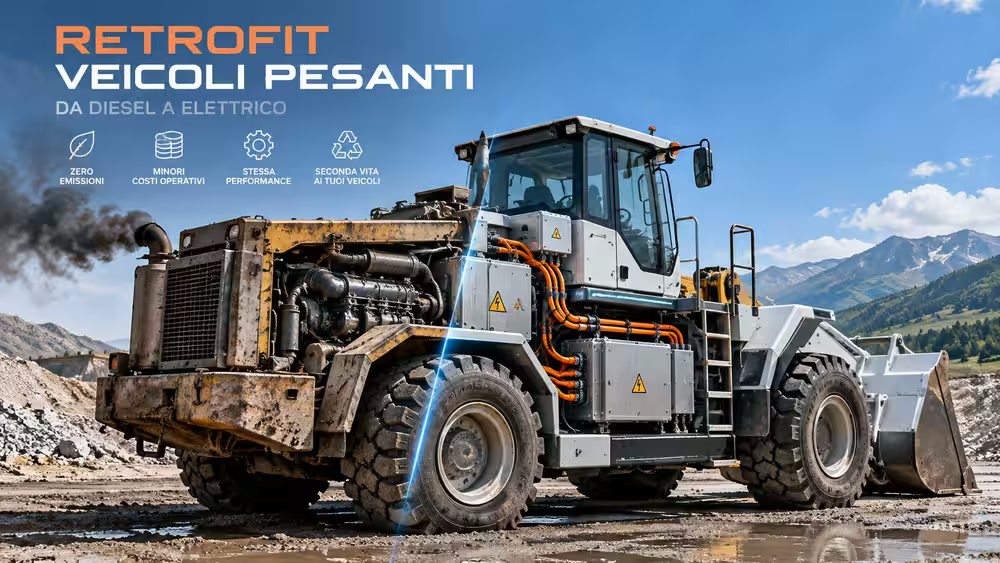
Heavy Retrofit
Hybrid conversion architectures designed around existing engines, transmissions and machine layouts. Project scope starts with the vehicle’s operating cycle, packaging constraints and required performance.
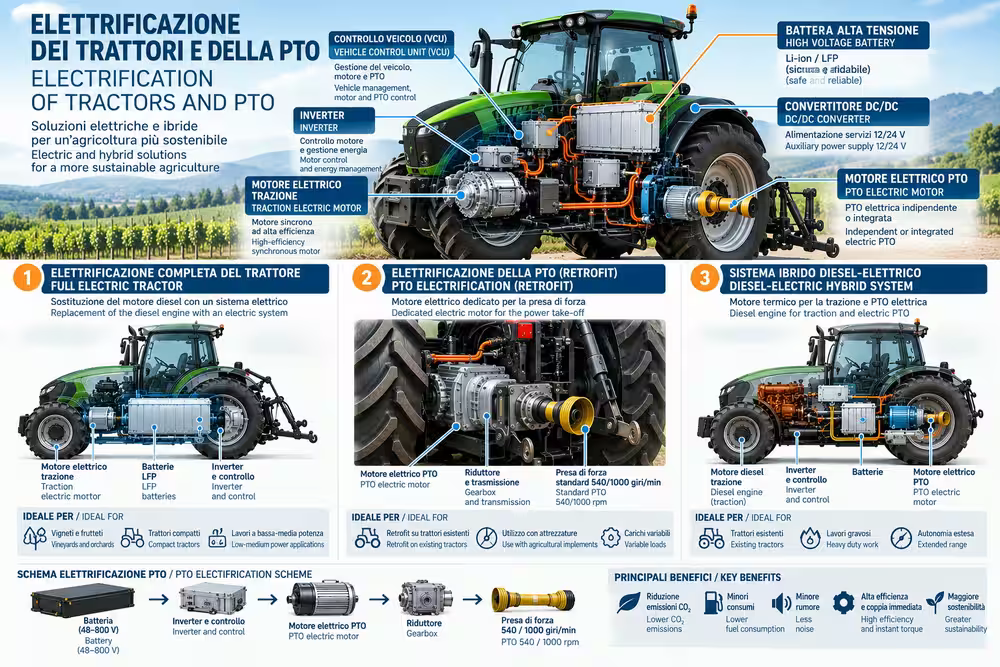
Advanced hybrid retrofit architectures, e-PTO systems, and intelligent power management for industrial and agricultural fleets.
Explore range →From hybrid conversion to auxiliary electric power, EVE HYBRID helps define architectures around the vehicle, its duty cycle and the equipment it must drive.

Hybrid conversion architectures designed around existing engines, transmissions and machine layouts. Project scope starts with the vehicle’s operating cycle, packaging constraints and required performance.

Electric power take-off concepts for auxiliary loads and hydraulic implements. The solution is assessed against power demand, operating duration, thermal conditions and integration requirements.

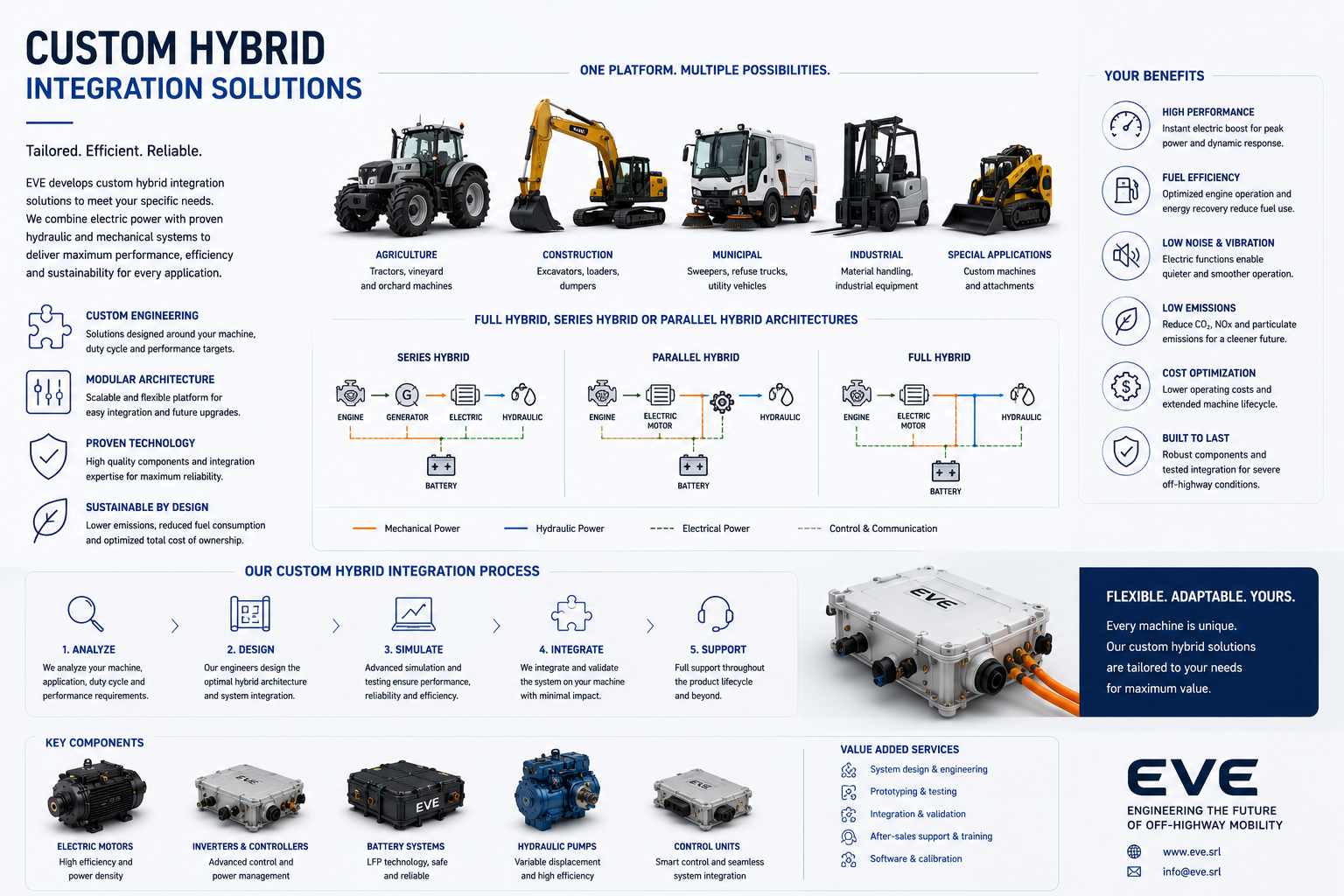
Application-specific development covering motor and inverter integration, battery interfaces, supervisory controls and energy-management strategies for real operating conditions.
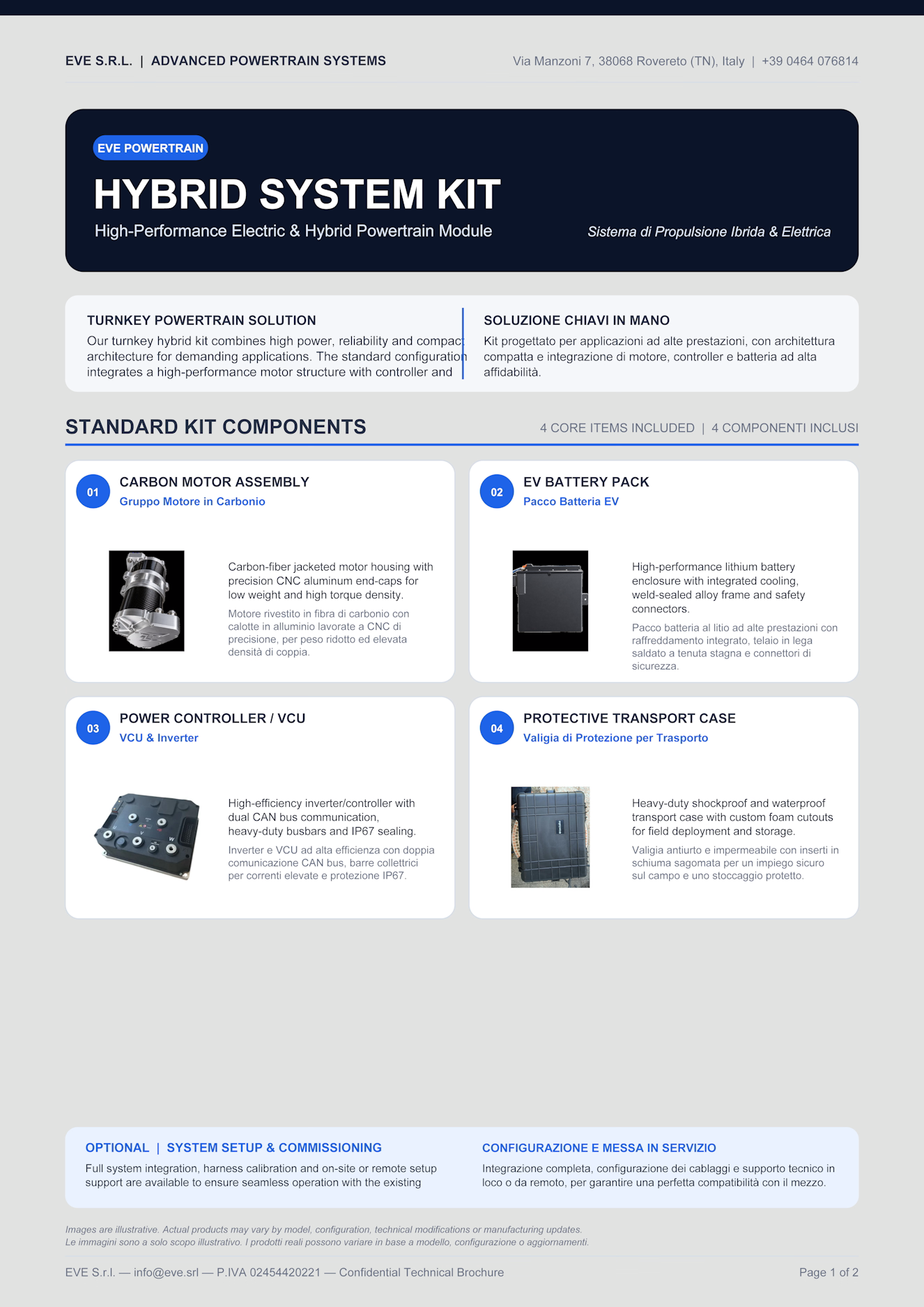
A configurable electric and hybrid powertrain platform combining motor, battery and control electronics in a compact system. The standard kit is designed to support demanding applications; final configuration depends on the vehicle, duty cycle and integration requirements.
Carbon-fiber jacketed motor housing with precision CNC-machined aluminium end-caps, designed for low weight and high torque density.
Lithium battery enclosure with integrated cooling, a sealed alloy frame and safety connectors.
High-efficiency inverter and vehicle control unit with dual CAN bus communication, heavy-duty busbars and IP67 sealing.
| Technical parameter | Brochure specification | Notes |
|---|---|---|
| Nominal voltage | 48–400 V, configurable | Wide DC operating range |
| Peak power | Up to 120 kW | Depends on configuration |
| Cooling | Liquid or forced air | Integrated thermal management |
| Communication | CAN 2.0B / CANopen | Telemetry and control |
| Ingress protection | IP67 sealed | As specified in brochure |
Options include custom gear ratios and housings, modified mounting points and shafts, tailored battery-pack capacity and geometry, software tuning, torque limits, CAN protocols and specialised harnesses.
EVE can support hardware mounting, high-voltage wiring, harness calibration, throttle mapping and bench testing, with on-site or remote technical support available.
2-page technical brochureExplore the product architecture, core components, configurable technical specifications and custom integration options in our bilingual brochure.
View brochureSpecifications are configurable and should be confirmed for the selected application. Images and descriptions are illustrative; final components and performance may vary by model and configuration.
Every project starts with the application. We help clarify requirements, identify technical questions and define the next steps for a suitable electrification concept.
Review vehicle type, operating cycle, power demand, available space and integration constraints.
Define component roles, interfaces and the main technical choices to investigate for the project.
Identify packaging, thermal, electrical, control and serviceability questions that require engineering validation.
Work with vehicle manufacturers and equipment developers to align the concept with intended use and project constraints.
A useful solution starts with the job the vehicle performs—not with a component chosen in isolation. Operating hours, load variation, hydraulic demand, travel requirements and charging opportunities all influence the architecture. EVE HYBRID helps structure these inputs so technical choices can be evaluated against the intended use.
Assess tractor and implement requirements, intermittent and continuous loads, work rates, available charging windows and the relationship between traction and auxiliary power. Field conditions, seasonal use and the need to operate attachments can all influence the most appropriate concept.
Consider demanding duty cycles, limited installation space, operating temperature, service access and the need to integrate new systems with existing mechanical equipment. The review should account for how the vehicle is used over a typical shift and how it is maintained.
Determine whether an electric auxiliary drive is suitable by examining required power, torque, operating duration, control needs and the overall energy budget. The interface with the implement and the expected behaviour during start-up, operation and shutdown are also important.
Each application requires its own technical assessment. Final architecture, component selection, performance targets and compliance requirements are defined according to the project and the vehicle configuration.
Early alignment helps focus effort on the technical questions that matter most. The scope can be tailored to the project stage, from an initial review to deeper integration planning. This creates a shared understanding of what is known, what remains uncertain and what evidence is needed before the next decision.
Review vehicle configuration, operating cycle, load profile, current systems and the reason for considering electrification.
Clarify power needs, space, thermal conditions, controls, charging or energy supply, service access and project boundaries.
Identify relevant architecture choices and the trade-offs that need to be assessed before committing to detailed design.
Agree on interfaces, open technical questions, responsibilities and the evidence needed to assess the proposed solution.
The right starting point is a clear picture of the machine, its working environment and the outcome the project is expected to deliver.
Potentially, depending on the vehicle architecture, operating requirements, available space, mechanical interfaces and applicable regulations. A feasibility review is needed before confirming a suitable approach.
Useful starting information includes vehicle make and model, current powertrain, typical work cycle, load or implement details, daily operating hours, space constraints and the outcome you want to achieve.
No. Depending on the use case, a hybrid architecture, an electric auxiliary drive or a more targeted subsystem may be worth assessing. The duty cycle and requirements should guide the decision.
The project can be framed around collaboration with vehicle manufacturers and equipment developers, with roles, interfaces, deliverables and validation responsibilities agreed at the outset.
Share your vehicle, duty cycle and target application. Together we can identify the key requirements and the most useful next engineering step.
Discuss a project →Tell us about the vehicle, its current powertrain, the work it performs and the technical or operational challenge you want to solve. Information about the duty cycle, loads and constraints helps make the initial discussion more focused.